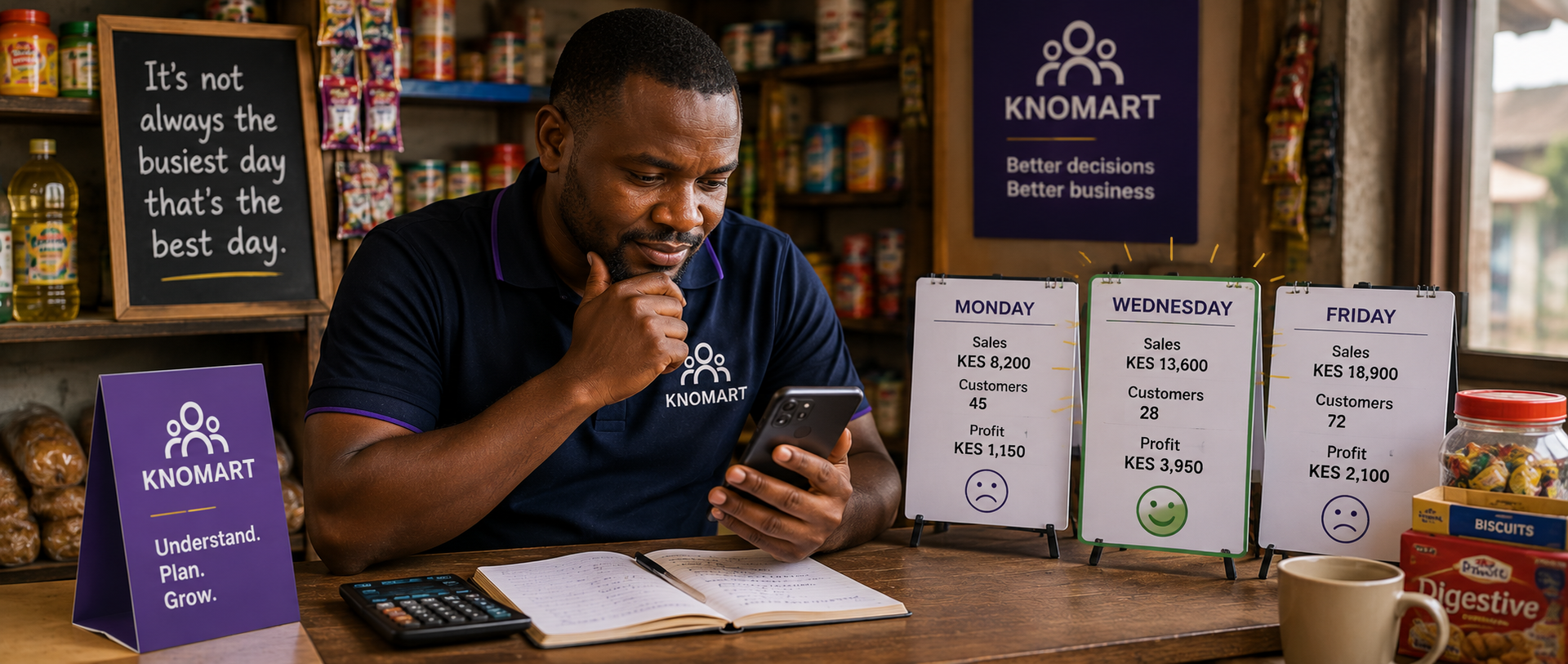
Ask a business owner which day was their best, and the answer may come quickly.
“Friday was the best.”
Usually, the answer is based on what was easiest to notice: a busy shop, a long queue, many customers or a large amount of money passing through the business.
But busy and best are not always the same thing.
What Does “Best” Actually Mean?
Before comparing your days, decide what you are measuring.
Is your best day the day with the most sales? The highest amount collected? The most customers? The highest margin? The day with the fewest problems?
Those measures can point to different days.
A day can look impressive from the counter while producing less useful business value than a quieter day. If you only remember how busy you were, you may miss what the numbers are telling you.
Look Beyond the Busiest Day
Imagine that Monday brings many small transactions while Wednesday has fewer customers but larger sales. Thursday may have strong sales but also unusually high costs.
Which one is the best?
There is no useful answer until the business owner can see the underlying records and compare the same measures across the days.
The point is not to make the numbers complicated. It is to stop one visible signal from becoming the whole story.
Patterns Become Clear When You Keep Records
A single day’s result can be misleading. Several weeks of organised records are much more useful.
You may discover that one day consistently brings more customers, another produces stronger sales, and another looks busy without contributing as much as expected.
That kind of pattern can change how you plan stock, staffing, opening hours and attention. More importantly, it gives you something better than a feeling to work with.
Ask Better Questions About Your Business
Instead of asking, “What was my busiest day?” ask:
“Which day produced the result I actually wanted?”
That question is more useful because it connects daily activity to the outcome the business is trying to achieve.
From Guessing to Knowing
Knomart’s role as merchant software is built around helping businesses organise the information behind everyday activity. The value of keeping sales records is not simply having a history of transactions. It is being able to look back and understand what happened.
Your best day may be the one you already think it is. Or it may surprise you.
The only way to know is to stop guessing and start comparing the days properly.
Do not just count your busiest day. Understand your best day.
Ready to get started?
Explore our apps and find the right one for your trade.