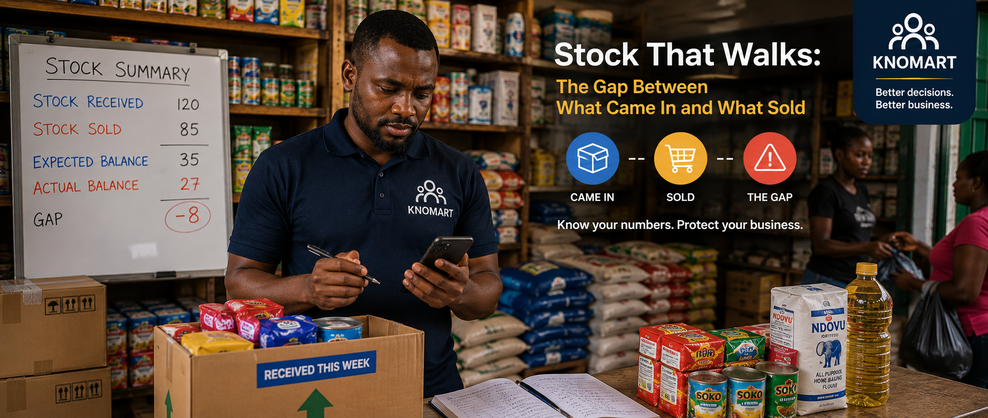
A business can receive a delivery today, sell products tomorrow and still have no clear answer when the numbers do not match.
That is the problem with treating stock as something you only count occasionally. Stock is moving all the time. Products come in, products go out, some are damaged, some are used, and some may remain on the shelf.
What Came In Is Not What Sold
Suppose a shop receives a new batch of products. The delivery increases the amount of stock available, but it does not mean those products have been sold.
Later, customers buy some of them. Now the business has a different stock position.
If you only look at purchases, you know what came in. If you only look at sales, you know what customers bought. You need both sides to understand what happened to the stock.
The Gap Tells a Story
When expected stock and actual stock do not agree, the difference is worth investigating.
Perhaps more products were sold than recorded. Perhaps some items were damaged or used by the business. Perhaps a delivery was recorded incorrectly. Or perhaps the physical count is simply wrong.
The gap does not automatically tell you why something happened. It tells you that there is something to understand.
Stock Records Should Follow the Movement
Good stock management is not just about knowing how many items are sitting on a shelf right now. It is about being able to follow the movement that produced that number.
What was received? What was sold? What remains? When those records are kept consistently, unusual differences become easier to spot.
Why This Matters for a Small Business
For a small business, every product represents money tied up in the business. Losing visibility over stock can make it harder to know what needs restocking, what is moving and where the business may be losing value.
You do not need to make stock management complicated. You need records that match the way stock actually moves through the business.
From Counting Stock to Understanding Stock
Knomart's merchant software approach is built around keeping business information organised. For a merchant, that means stock records can sit alongside the sales and other information needed to understand daily operations.
The important habit is simple: do not only ask how much stock you have. Ask how it got there, where it went and whether the records explain the difference.
What came in, what went out and what remains should tell the same story.
Ready to get started?
Explore our apps and find the right one for your trade.